Adrienne Rich famously wrote “poems are like dreams: in them you put what you don’t know you know”. This dream knowledge gives shape to numerous architectural spaces in Williams’s collection. We are told in her notes that each is in fact a separate dream: many were dreamed and compiled during lockdown and the early days of motherhood, both carceral experiences in different but not entirely unrewarding ways. Hence the efflorescence of poems. If in psychoanalysis dream houses stand in for the self, then Williams throws open many different doors to find the complex furniture of shame, grief, lost love or friendship. Via the unconscious we enter hotels, houses, single rooms, bars, shopping malls, walled gardens; some uncannily familiar, others entirely foreign. We find ultimately what “feels like a real place / but is not a real place – joy, pure joy”. The self turns out to be the only reliable home, and our obsessive need for it is an estrangement from happiness: “A house / made entirely / of very charred / slabs of wood”. Rooms cannot hold us safely for ever. We must carry joy within us, against adversity and threat.
Available now from Shearsman Books
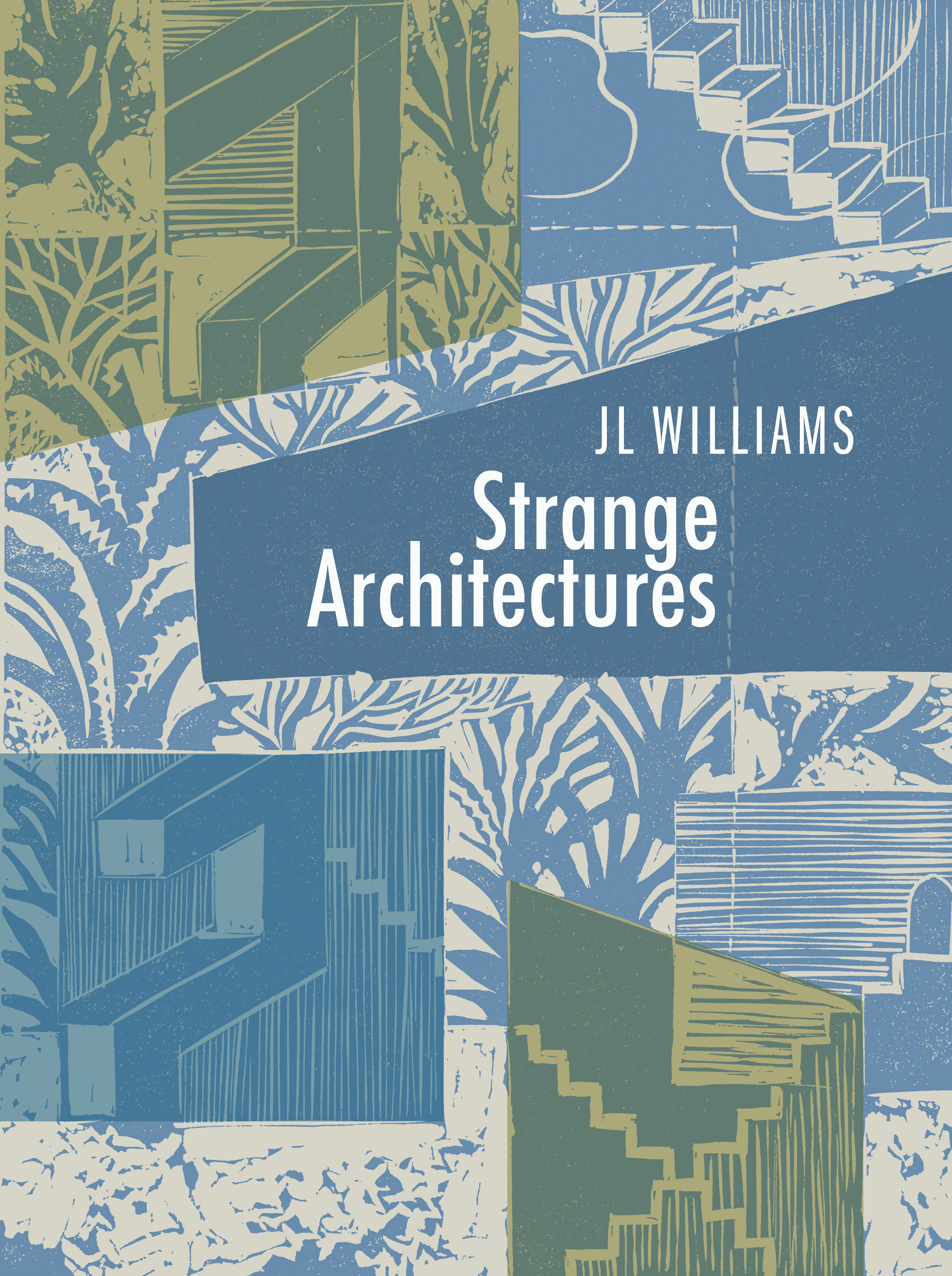
Book Cover by Anupa Gardner
A is for Architecture Podcast Interview exploring Strange Architectures
This tour through Piranesian dreamworlds is also a tour through collective desire. With a subtle clarity, Jennifer Williams shows how our fears and longings manifest in architectural fantasies: the dream home, the model workplace, the palace of wonders. The buildings of these tense lyrics are at once familiar and disturbing, the way an influencer’s aspirational feed betrays what’s bloodthirsty about want. Where one poem comforts or pleases, another unsettles, and another confuses, because in this oneiric logic feelings flow with less reason and more truth. By pursuing her own obsessions with skilful and restrained poetic commitment, Williams has made a very personal map that anyone can, and should, follow in order to find themselves lost.
Like Italo Calvino’s invisible cities, these oneiric architectures rise up revealing a glimmering imagination. The visually compelling constructions in these poems possess a beauty that can be subtly unsettling in its materials, proportions, or the relationships or emotions hidden within. At a time when our eyes are already jaded from the remixed possibilities of AI-generated imagery, this intriguing collection is balm for the inner eye, offering an expansive poetics of space as well as an invitation to take in a sharper and more intricate view of the details around us, and savour the questions about our ways of inhabiting.
Jennifer constructs cities and skylines of words, inviting us to live within their shelter and syllables. Her poem-architectures are exact ambiguities, precisely lit from every angle of language and geometry to pinpoint each space, each proportion.

